

Laser Eye Surgery
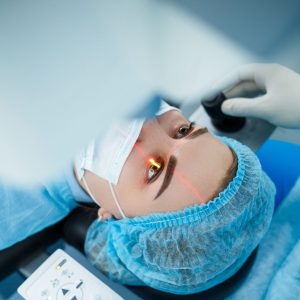
Laser eye surgery encompasses a variety of highly precise ophthalmic procedures that utilize advanced laser technology to treat a wide range of visual conditions, including refractive errors and retinal diseases. In contrast to traditional surgeries, in these procedures the laser is the primary therapeutic tool, not just a supporting instrument.
Refractive Laser Surgery
These procedures are designed to correct refractive errors such as myopia (nearsightedness), hyperopia (farsightedness), astigmatism, or presbyopia, with the goal of reducing or eliminating the need for eyeglasses or contact lenses.
Main techniques:
- LASIK (Laser-Assisted In Situ Keratomileusis)
- PRK (Photorefractive Keratectomy)
- SMILE (Small Incision Lenticule Extraction)
Benefits:
- Rapid visual recovery
- Outpatient procedure
- High success and safety profile
- Minimal postoperative discomfort
Retinal Laser Treatments
These laser procedures are used to treat or prevent vision-threatening retinal conditions by sealing abnormal blood vessels, controlling hemorrhages, or stabilizing retinal tissue.
Common indications:
- Laser photocoagulation for diabetic retinopathy
- Retinal tears or small detachments
- Retinal vein occlusions
- Choroidal neovascularization
YAG Laser Capsulotomy
Following cataract surgery, some patients may develop posterior capsule opacification, which leads to blurred vision. YAG laser capsulotomy is a non-invasive procedure that creates a small opening in the cloudy capsule to restore clear vision.
- Quick, painless, and incision-free procedure
- Immediate visual improvement
- Performed in-office under topical anesthesia